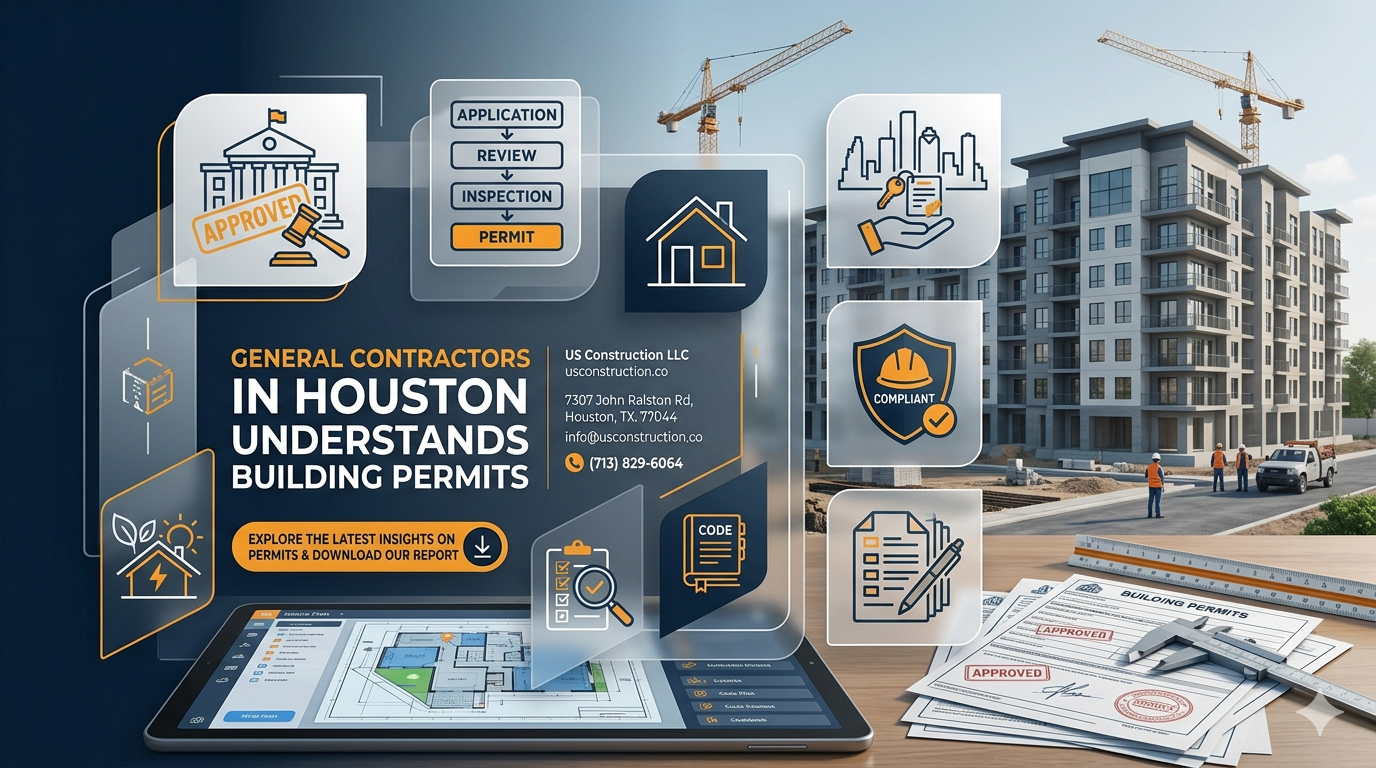
Permit approvals for commercial construction are stricter and more complicated in Houston, Texas. Houston general contractors understand building permits for successful project completion and quality control. They start the approval procedures early to reduce delays and future conflicts. It’s not a simple paperwork; it outlines the smooth execution and reliable construction quality.
US Construction LLC is the most experienced general contracting company in Houston, Texas, with strong connections with municipal authorities. Our experts have complete know-how of permitting, in-depth knowledge of local zoning laws, building codes, inspections, and compliance requirements. Contact us for large-scale commercial developments to tenant build-out projects.
Why Complying with Building Codes in Houston
Following Houston, Texas building regulations is not only required by law but also a vital safety measure. It is necessary for contractors, homeowners, and the community at large. Given the region’s distinct climate and flood concerns, Houston’s building codes are intended to guarantee long-term performance.
Houston general contractors comply with local environmental-resilience and structural-safety requirements. Serious safety risks, costly fines, construction delays, and liability issues may arise from violating these regulations.
Structural Safety and Occupant Protection
Minimum requirements for machinery installations, fire safety, plumbing, power systems, and skeletal stability are set by building codes. Compliance ensures that buildings can withstand environmental stress in a city vulnerable to hurricanes, strong winds, and torrential rain.
The risk of collapse, water infiltration, and fire threats is greatly decreased by properly developed foundations, weatherproof construction, and approved materials, safeguarding both investments and lives.
Addresses Floodplain Requirements
Strict development regulations, especially in flood-prone areas, are a result of Houston’s past of catastrophic flooding. Site grading keeps water from building up, drainage systems are sufficient, and structures are raised appropriately when local revisions and floodplain control laws are followed.
Increased susceptibility during extreme weather occurrences, higher insurance rates, and the denial of occupancy certificates are all consequences of noncompliance.
Prevents Legal Consequences
Buildings that violate building rules may be subject to stop-work orders, penalties, forced rehabilitation, or even demolition. If dangerous conditions result in harm or property damage, investors may also be held legally responsible.
Additionally, before authorizing financing or coverage, lenders and insurers frequently want documentation of code compliance. In brief, compliance safeguards your financial interests.
Maintains Property Value
It is simpler to sell, lease, and refinance properties that comply with the code. Buyers and investors want confirmation that development complies with local regulations during inspections. Unauthorized work or noncompliant changes may delay deals, lower property values, or require costly retrofits before closing.
Supports Efficient Project Approvals
Construction schedules are streamlined when Houston’s permits and inspection procedures are understood and followed. Plans that adhere to code standards from the outset expedite review and approval and increase the likelihood that inspections will pass on the first try, minimizing delays and expensive rework.
Promotes Energy Efficiency
Updated requirements for airflow, soundproofing, energy efficiency, and system efficiency are incorporated into modern building regulations. Benefits of compliance go far beyond the original construction and include reduced environmental impact, improved indoor air quality, and lower operating expenses.
Challenges Contractors Face with Local Regulations
Respecting local building codes is crucial, but it’s rarely easy. General contractors in Houston, Texas, must navigate a complex web of zoning regulations, permitting processes, municipal laws, and inspection requirements. If not handled proactively, these difficulties may affect project coordination, finances, and schedules.
Constantly Evolving Building Codes
New safety regulations, environmental standards, and engineering techniques are all reflected in the frequent updates to building codes. Contractors need to be aware of changes to energy efficiency requirements, floodplain laws, and municipal legislation. Ignoring an update might lead to failed inspections, redesign expenses, or plan rejections.
Complex Permitting Process
Plans for structural, mechanical, electrical, plumbing, and fire safety are reviewed by several departments as part of Houston’s permitting process. It can take a lot of time to coordinate agency clearances. Project timelines may be impacted by even little paperwork mistakes that result in proposal delays or revised submissions.
Floodplain and Drainage Requirements
Contractors are required to adhere to stringent elevation standards, runoff studies, and drainage control regulations due to Houston’s susceptibility to flooding. It frequently takes more engineering, cost modifications, and longer review periods to design projects that satisfy both client demands and flooding compliance standards.
Zoning and Land Use Restrictions
Despite Houston’s reputation for having few traditional zoning laws, there are nonetheless local variations in land-use regulations. These setback requirements impact development limits, deed restrictions, and parking minimums. Before construction begins, contractors must thoroughly assess site-specific limitations to prevent costly redesigns.
Inspection Approval Delays
Several inspections are usually needed for projects at various phases of construction. It might be difficult to coordinate subcontractors, inspectors, and site preparation. If the work fails inspection, corrections must be made before moving forward, which could result in delays and labor rescheduling issues.
Coordination Among Subcontractors
Strong project leadership is necessary to ensure that architectural teams, electricians, plumbers, and HVAC professionals all meet code standards simultaneously. A single noncompliant installation may delay the project.
Cost Implications
Through engineering designs, superior materials, testing specifications, and advisory fees, compliance often increases upfront costs. Although these expenditures increase durability and safety, rigorous cost control and budgeting are necessary.
Documentation and Record Keeping
Permits, accepted designs, audit checks, change orders, and certificates are just a few examples of the comprehensive documentation required for regulatory compliance. Legal protection, future real estate sales, and audits all depend on keeping precise records.
Houston General Contractor Near Me
Comprehending Houston building permits is crucial to maintaining efficiency, timeliness, and compliance. When you work with a professional Houston general contractor, all approvals, inspections, and regulations are handled expertly, allowing you to concentrate on building confidently.
Are you prepared to begin your project construction with reliable developers? Contact US Construction LLC at www.usconstruction.co or call (713) 829-6064.